After the last two practice pieces from green cherry wood I decided to try turning something out of one of the blanks cut from the burl proper. I chose the least promising blank which was the cap of one of the burl sections about 10 inches in diameter and about 3 inches thick. You can see the chunk below, it is the part below the red line on image.
I could have tried turning it as a live edge bowl with the bark as the top but I could already see a big bark inclusion hole on the cut side so I decided to make that the top and mostly turn that hole away. I was a little preoccupied with this one so I don’t have a lot of in progress photos. I drilled a 2 1/4” x 3/8” recess in the center of the flat side and mounted it on the lathe chuck and used the live center in the tail stock for stability.
Removing the bark shoots bark all over the room and starts out very rough turning. I used a 1/2” spindle gouge for most of the rough turning and that worked pretty well. I eventually got down to mostly wood, though with considerable areas of bark inclusion. I got a nice shape on the outside and cut a tenon on the bottom so I could hold it in the chuck for hollowing. I sanded the outside to 320 grit.
I turned it around in the chuck and I proceeded to hollow the interior of the bowl. As I got close to 1/2” thickness over all some of the bark inclusion chunks came out and there were some holes, fortunately they were non structural and cool looking holes. I sanded the interior of the bowl to 320 grit.
I took the bowl off the lathe and buried it in the desiccant beads for three days. Here’s what it looked like right off the lathe.
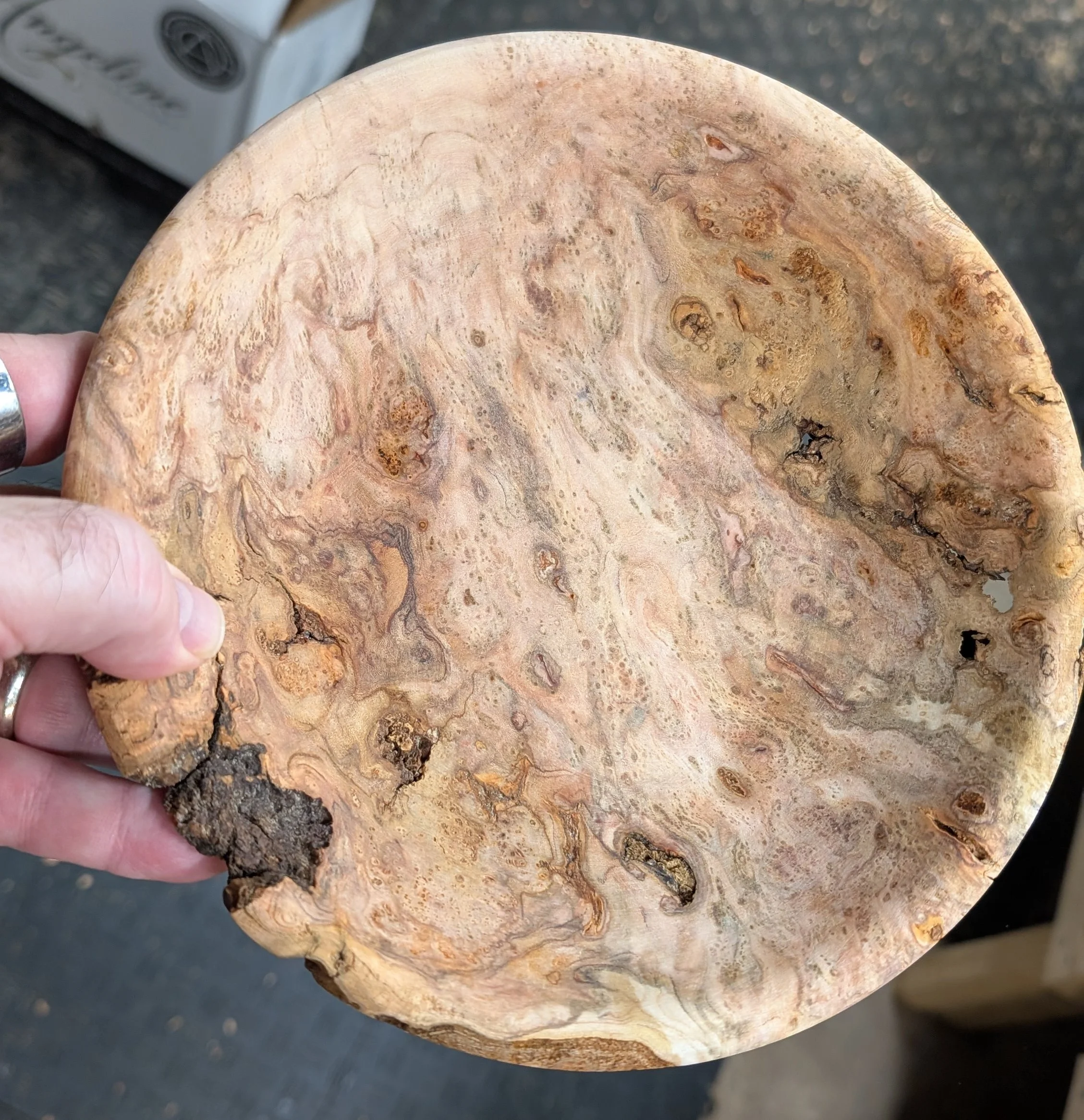
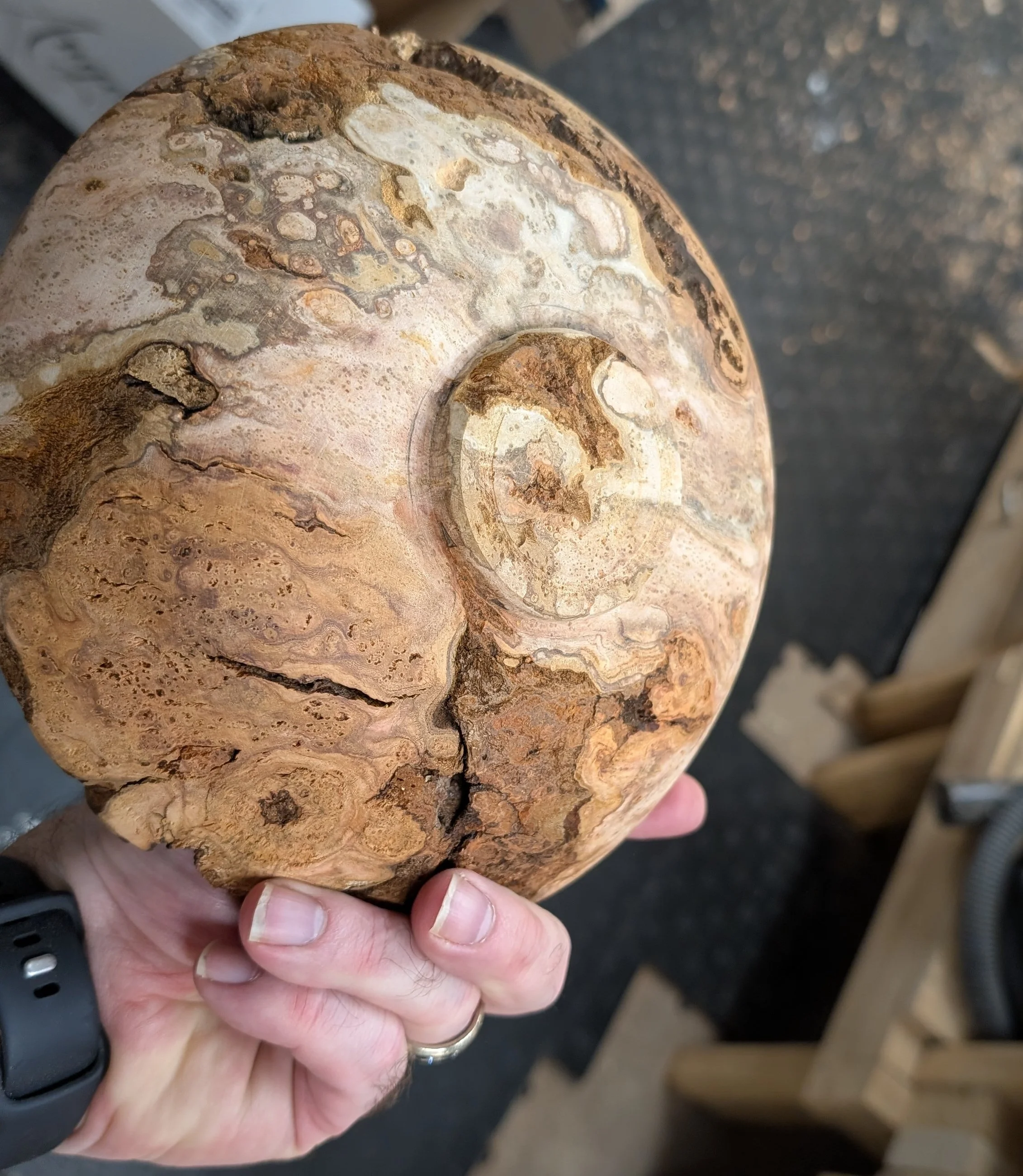
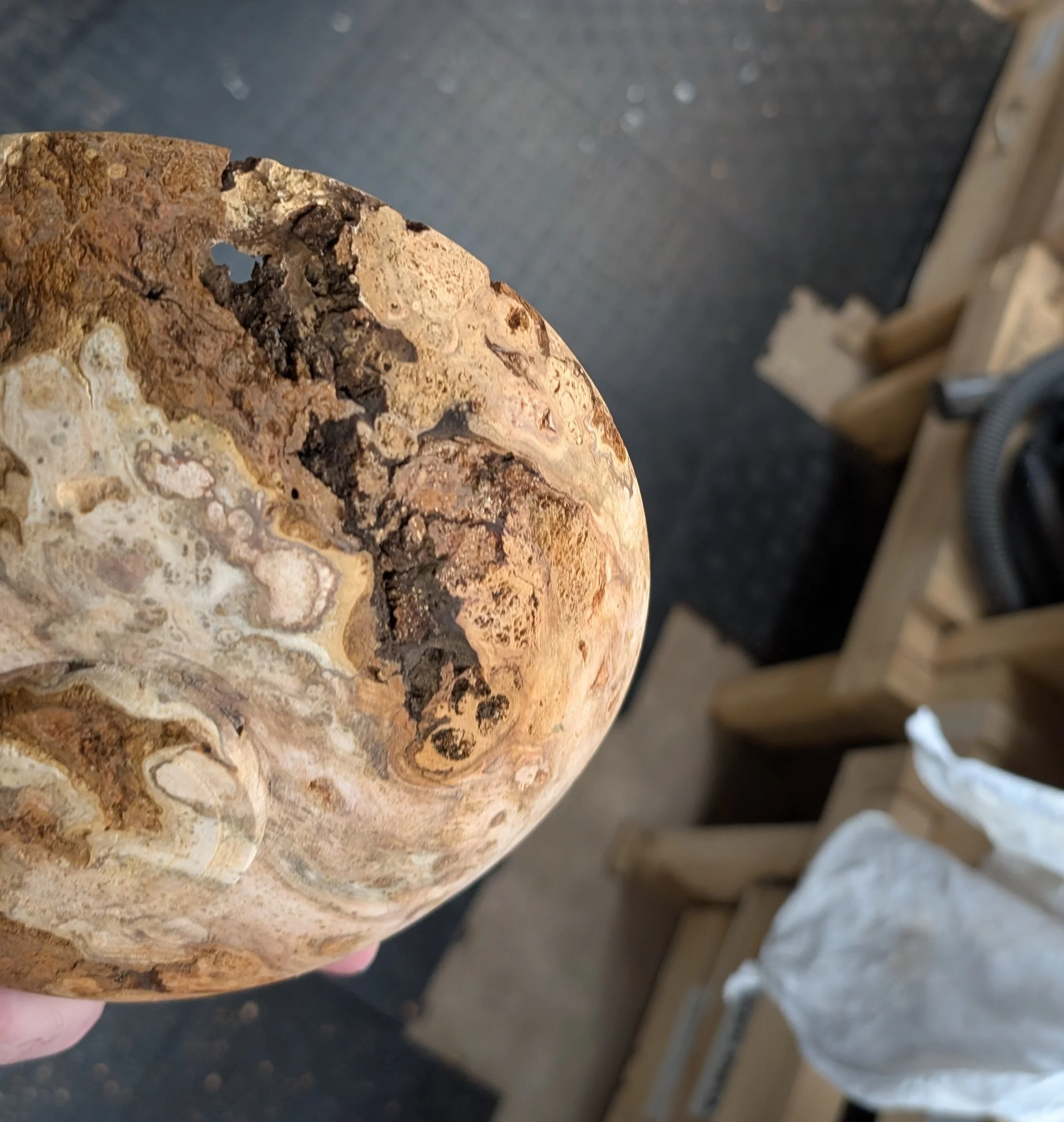
The drying went really well, I fully expected the tenon would cause the bottom to crack because it was twice as thick as the sides but it didn’t. I cut the tenon off with a flush cut saw and sanded the bottom of the bowl to 320 grit.
I then applied a coat of shellac based sanding sealer and let that cure over night. The next day I sanded it again with 400 grit and then put a second coat of shellac on it to stabilize and harden some of the softer areas. It also darkened the bark inclusions considerably which looked great. The next day I sanded it up to 1000 grit and then applied Thompson Butcher Block Conditioner to the bowl. Here’s the finished item.
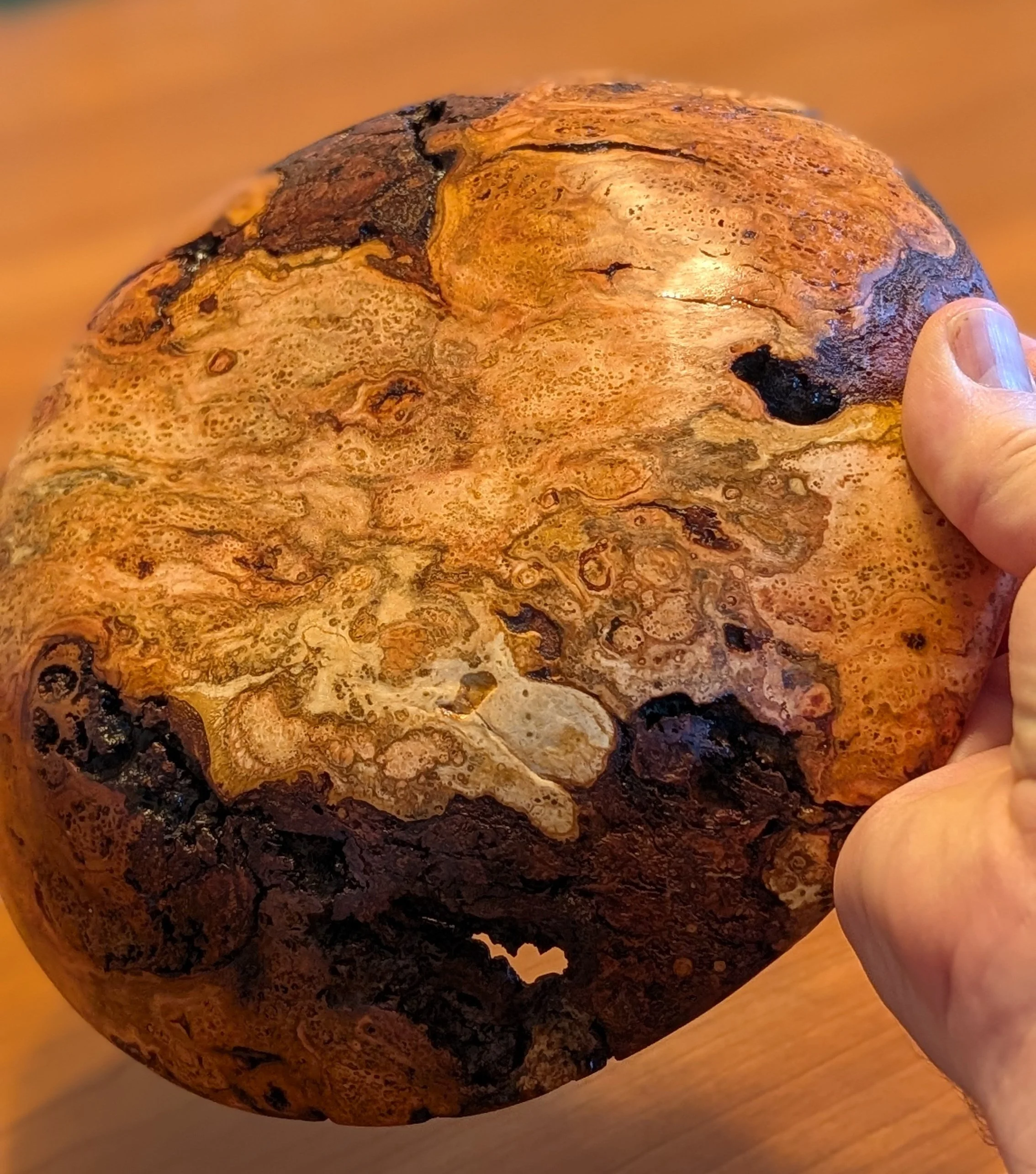
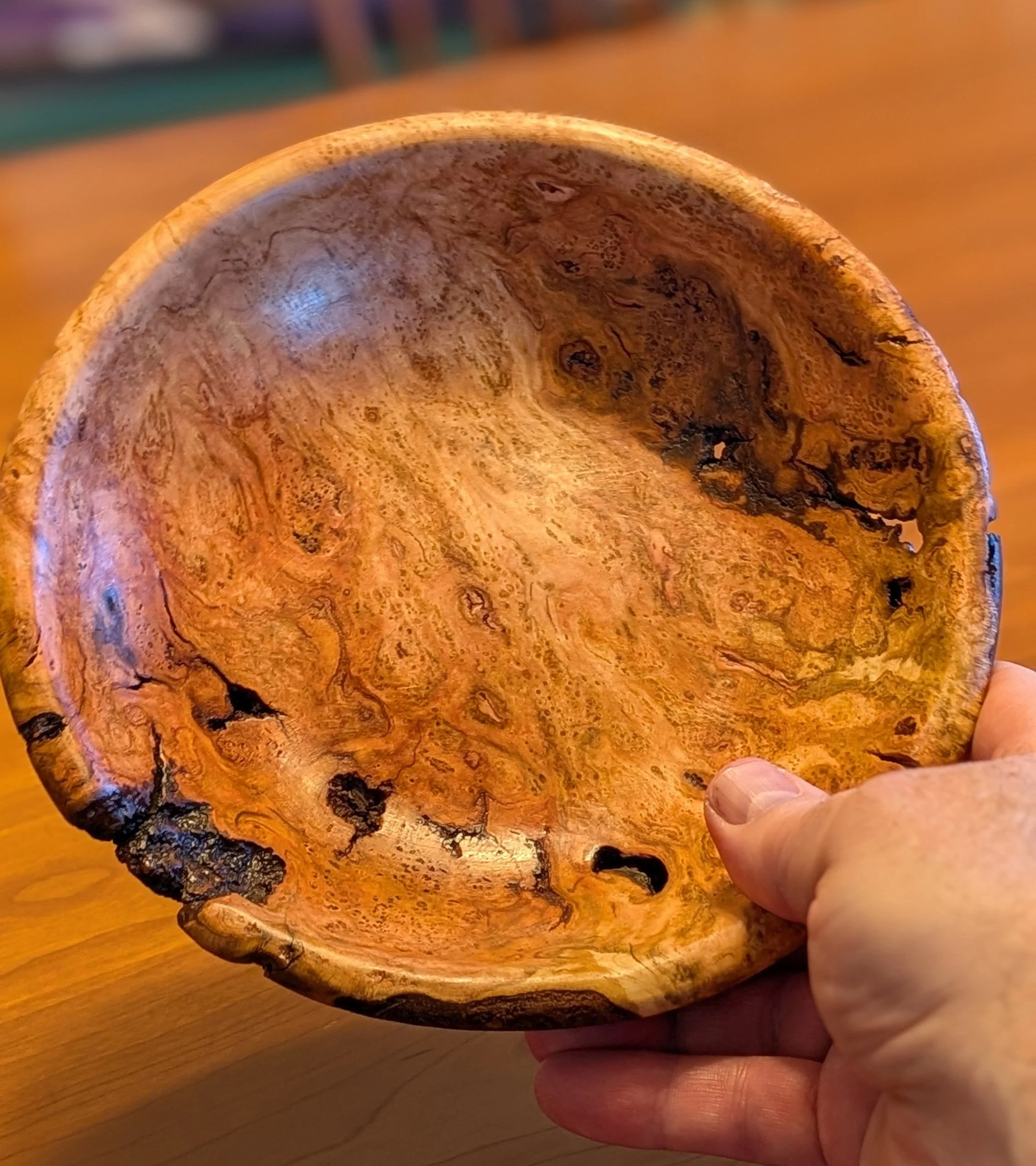
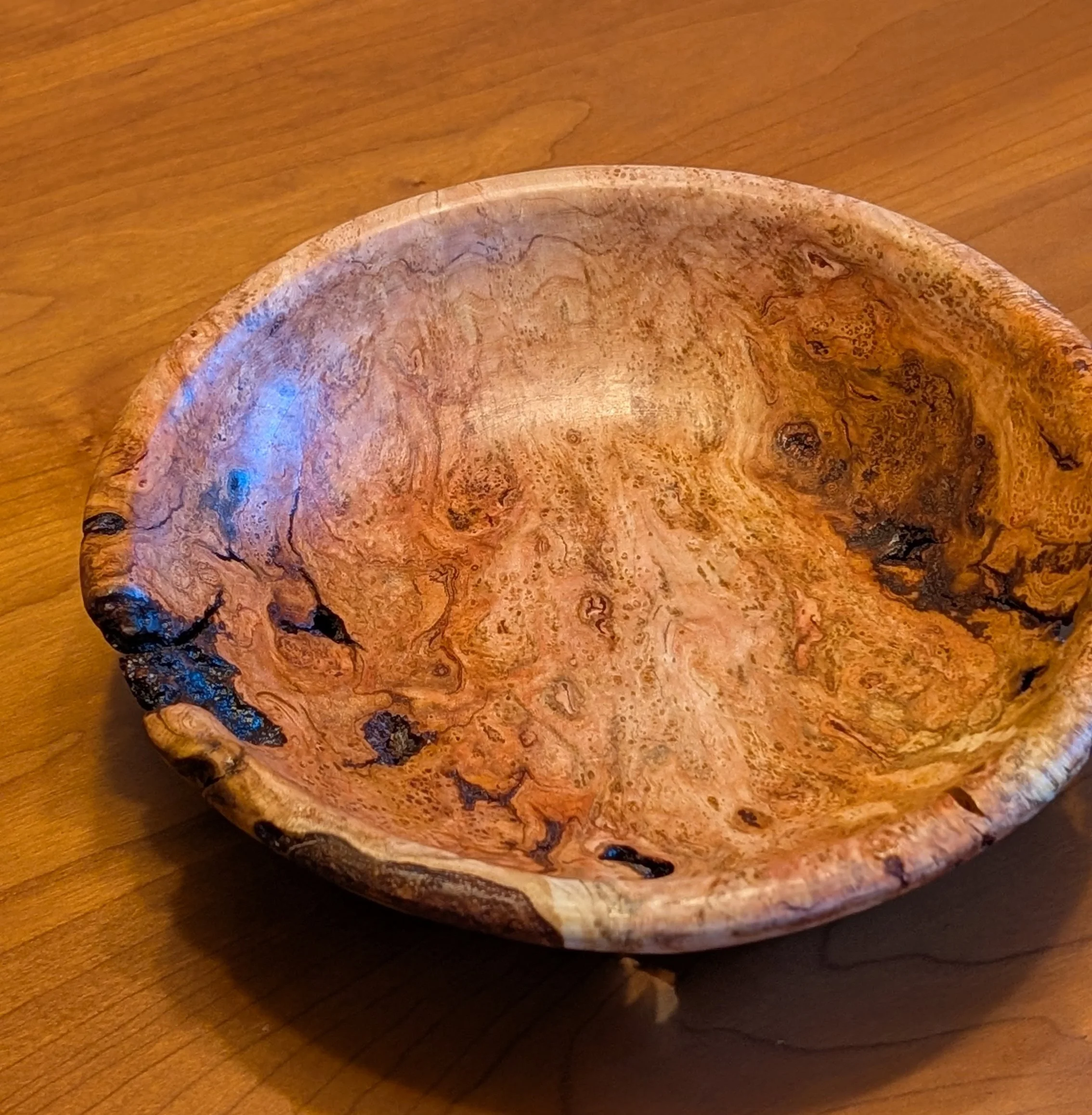
I really like how it came out, clearly not going to hold soup but still a very nice artistic bowl that is very usable.